




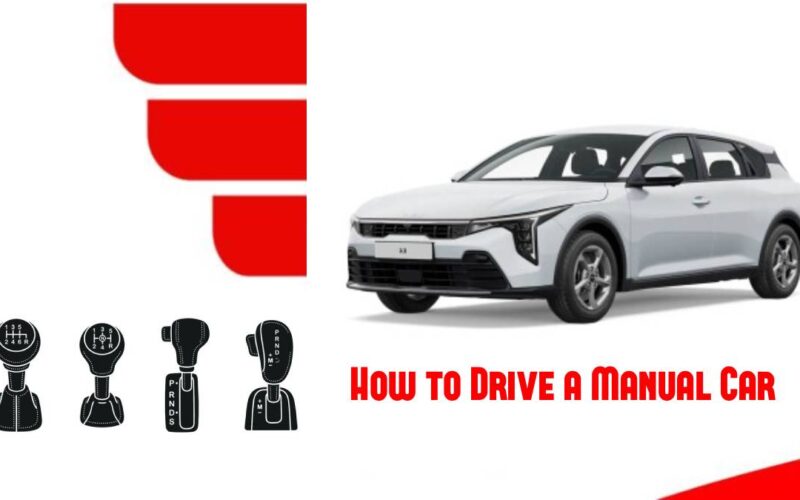
Learning to drive a manual car can feel overwhelming the first time you sit behind the wheel. With three pedals instead of two and the responsibility of changing gears yourself, it’s easy to wonder if you’ll ever get the hang of it. The good news is that almost every experienced manual driver started exactly where you are now.
The first few attempts might include a stalled engine or a jerky start, but that’s completely normal. Once you understand how the clutch and gearbox work together, driving a manual becomes much smoother and, for many people, much more enjoyable than driving an automatic.
If you’re ready to learn, here’s how to get started.
Step 1: Start the Car Correctly
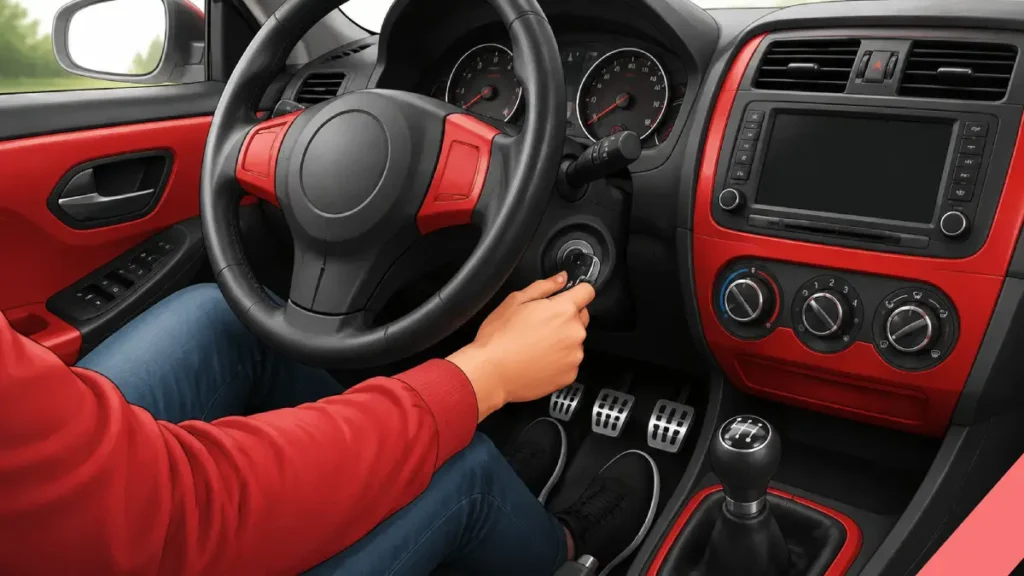
Before starting the engine, make sure the gear lever is in the neutral position. Press the clutch pedal all the way down with your left foot and keep your right foot on the brake. Once you’ve confirmed the car is in neutral, start the engine as you normally would.
Many newer manual cars are designed not to start unless the clutch is fully pressed, so don’t be surprised if nothing happens without it.
Step 2: Shift Into First Gear
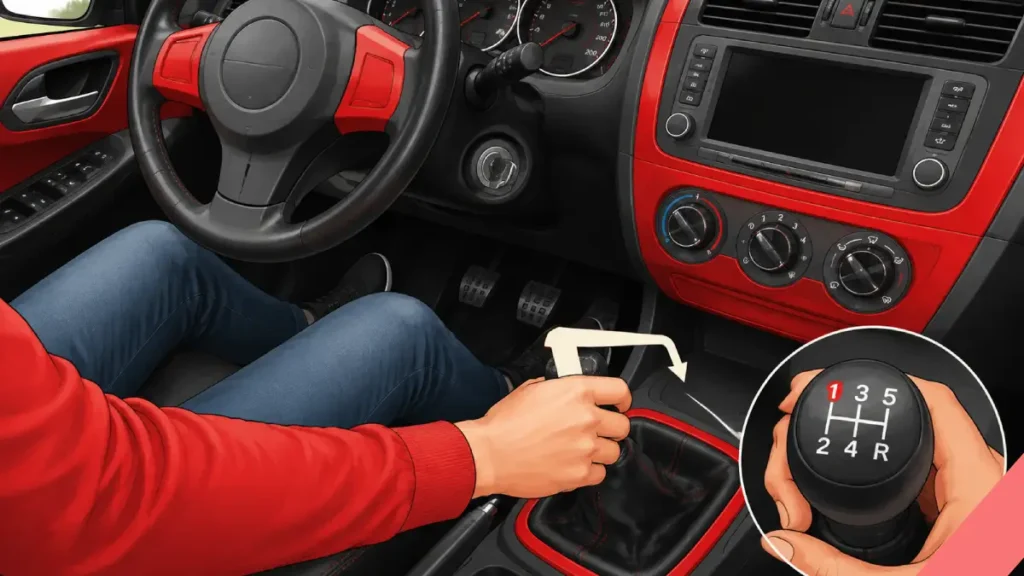
With the engine running and the clutch still pressed to the floor, move the gear lever into first gear.
Don’t rush this part. Keep your foot firmly on the clutch until you’re ready to move. At this point, the car is prepared to drive, but it won’t move until you begin releasing the clutch.
Step 3: Find the Clutch’s Bite Point
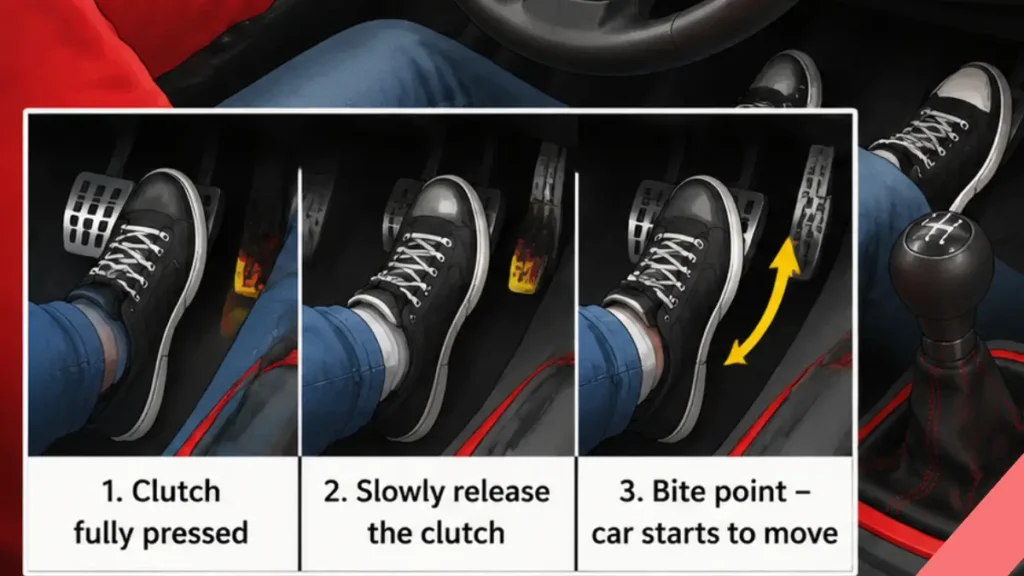
This is the step that takes the most practice.
Slowly lift your foot from the clutch until you feel the front of the car gently begin to move. Drivers often call this the bite point because it’s the moment the clutch starts connecting the engine to the wheels.
As you reach this point, gently press the accelerator while continuing to release the clutch smoothly. If you let the clutch out too quickly, the engine may stall. If that happens, don’t panic—simply restart the car and try again. Almost everyone stalls a manual car while learning.
Step 4: Change Into Higher Gears
Once you’re moving, you’ll eventually need to change into second gear and then continue through the higher gears as your speed increases.
When the engine starts working harder and the revs climb to around 2,500 to 3,000 RPM, it’s usually time to shift up. Ease off the accelerator, press the clutch, move the gear lever into the next gear, then release the clutch smoothly while gently pressing the accelerator again.
The more you practice, the more natural this movement will feel, and before long you’ll change gears without even thinking about it.
Step 5: Downshift as You Slow Down
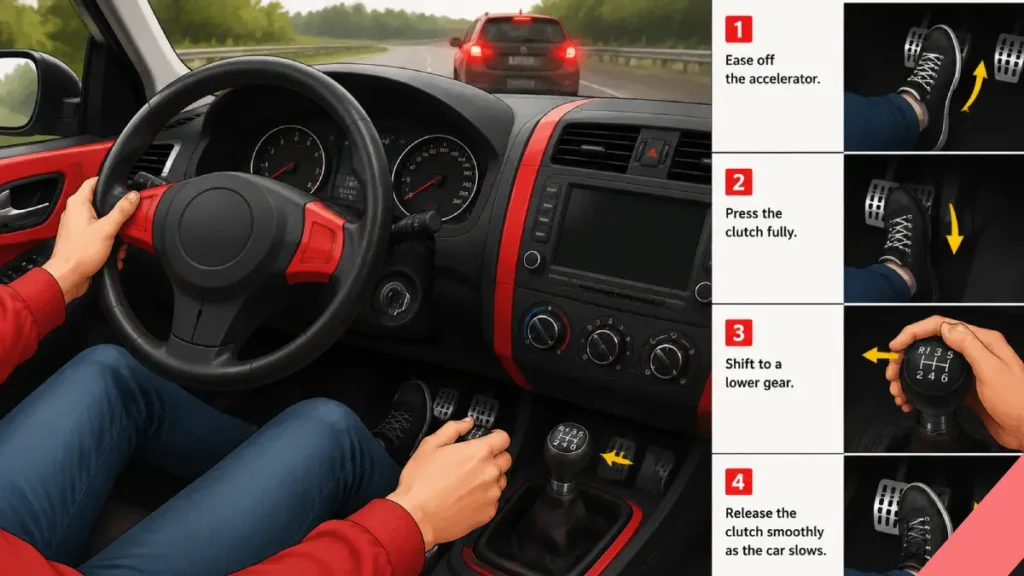
Driving isn’t only about speeding up—you also need to know when to shift into a lower gear.
As you approach a junction, roundabout, or slower traffic, press the clutch and select the appropriate lower gear before releasing the clutch smoothly. This helps the engine stay in the right power range and makes the car easier to control.
Some experienced drivers use a technique called rev matching to make downshifts even smoother, but if you’re just learning, it’s perfectly fine to focus on making clean and comfortable gear changes first.
Step 6: Bring the Car to a Safe Stop
Stopping a manual car is straightforward once you’ve practiced a few times.
As your speed drops, press the clutch before the engine begins to struggle, then continue braking until the car comes to a complete stop. Once stopped, move the gear lever back into neutral and release the clutch. If you’re parking, apply the handbrake before turning off the engine.
After repeating this process a few times, it will quickly become second nature.
Don’t Worry If You Stall
One of the biggest fears for new manual drivers is stalling the engine, especially at traffic lights or on a hill. The truth is that every manual driver has stalled a car at some point, even those with years of experience.
Instead of getting frustrated, think of each stall as part of the learning process. Every time you practice, your left foot becomes more familiar with where the clutch engages, and eventually you’ll move away smoothly without even thinking about it.
Practice Makes the Difference
Reading about driving a manual car is helpful, but real confidence comes from practice.
Start somewhere quiet, such as an empty parking lot or a quiet residential street, where you can focus on clutch control without the pressure of heavy traffic. Spend time practicing moving off, stopping, and changing between first and second gear before tackling busier roads.
Once those basics become comfortable, the rest of manual driving will feel much easier.
So What Next?
Learning to drive a manual car isn’t about getting everything right on the first day. It’s about building confidence one drive at a time.
Take things slowly, don’t be discouraged by a few mistakes, and remember that every experienced driver was once a beginner. With enough practice, changing gears, finding the bite point, and driving smoothly will become second nature, giving you a skill that can last a lifetime.
